
Why Scam Calls Are Increasing — And What Australian Businesses Can Actually Do About It
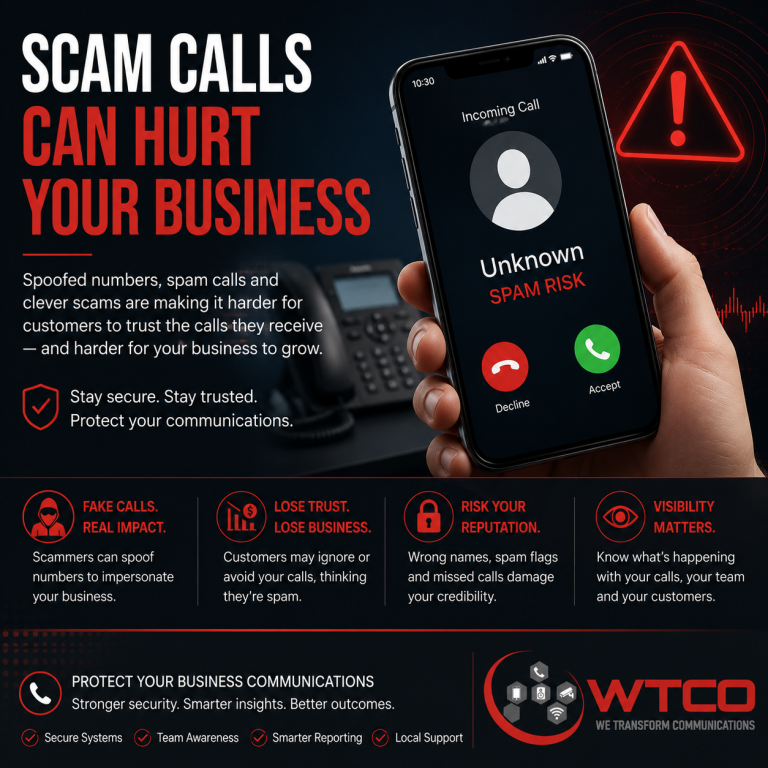
Scam calls, spoofed caller IDs and “Spam Risk” warnings are making customers harder to reach. Here’s what business owners need to know — and what practical steps can help protect customer trust.
If it feels like scam calls, fake caller IDs and spam warnings are getting worse, you are not imagining it. Across Australia, businesses and customers are dealing with scam calls pretending to be legitimate companies, fake missed calls, spoofed mobile numbers, incorrect caller names and customers ignoring real calls because trust is dropping.
The problem has become serious enough that the Australian Government has been consulting on a new Scams Prevention Framework, aimed at reducing scam activity across sectors such as telecommunications, banking and digital platforms.
For businesses that rely on phone calls, this is no longer just a background technology issue. It can directly affect customer trust, sales enquiries, answered call rates, staff productivity and your business reputation.
Common questions we hear:
- “Why is my number showing as spam?”
- “Why are customers not answering our calls anymore?”
- “Why is the wrong business name showing when we call people?”
WTCO has covered the caller ID issue in more detail here: Why Is the Wrong Name Showing When I Call?
Why Legitimate Business Numbers Sometimes Show as Spam
One of the biggest misunderstandings is that a spam warning automatically means your phone system has been hacked. That is not always the case.
In many cases, scammers use a technique called caller ID spoofing. This allows a scammer to make it look like they are calling from a different number. They may use local-looking numbers, business numbers or numbers similar to real organisations to increase the chance someone answers.
Unfortunately, legitimate business numbers can become collateral damage. If a number is spoofed, reported by customers, recycled from previous use, or associated with unusual calling patterns, it may be flagged by mobile networks, spam databases or call-blocking apps.
Why Scam Calls Are Becoming More Sophisticated
Modern scam activity has moved well beyond obvious robocalls. Scammers now use local Australian numbers, SMS impersonation, fake caller IDs, compromised systems, social engineering and increasingly convincing scripts.
Some scams target businesses directly by impersonating suppliers, pretending to be banks, requesting urgent account changes, attempting SIM swap fraud or tricking staff into changing call diversions.
Signs Your Business Communications Could Be Vulnerable
Not every issue means there is an active scam, but the following warning signs should be taken seriously:
Unusual call activity
Unexpected outbound spikes, after-hours traffic, unusual international calls or repeated failed registrations.
Customer complaints
Reports that your number displayed as spam, showed the wrong name or was used in a suspicious call.
Phone system changes
Unexpected diversions, weak voicemail PINs, shared logins or unsecured remote access.
Staff process risks
Requests being approved too quickly, no callback verification or unclear rules for account changes.
What Australian Businesses Should Do Right Now
The good news is that many communication-related scam risks can be reduced with practical, common-sense controls.
1. Enable multi-factor authentication
If your phone system, email platform or admin portals support MFA, turn it on. It is one of the simplest ways to reduce the risk of account compromise.
2. Secure your PBX and phone system
Business phone systems should not be treated as “set and forget.” Use strong passwords, review admin access, secure voicemail PINs, restrict unnecessary international calling and monitor unusual activity where possible.
3. Train staff on scam awareness
Many scams work because people are pressured into acting quickly. Staff should understand fake urgency, impersonation attempts, phishing emails, fraudulent payment requests and suspicious verification requests.
4. Verify sensitive requests properly
Requests involving diverts, SIM replacements, account changes, payment details or password resets should never be approved without proper verification. A simple callback to a known contact can prevent major problems.
5. Monitor business call activity
Most businesses have very little visibility into missed calls, abnormal call behaviour, after-hours activity or unusual traffic spikes. Better reporting helps you spot operational problems and possible risk indicators earlier.
Why Communication Visibility Matters More Than Ever
Many businesses still rely on raw CSV exports, basic call counts or manual reports. That does not always show the full story.
Modern communication reporting should help businesses understand what happened, what needs follow-up, where customers may be getting missed and whether unusual patterns are appearing.
That is one reason WTCO developed Smartline reporting — to help businesses move beyond basic call logs and actually understand the story behind the data.
Useful Australian Scam & Security Resources
- Scamwatch Australia — consumer and business scam warnings.
- Australian Cyber Security Centre — cyber security advice for businesses.
- ACMA Scam Information — phone and SMS scam information.
- IDCARE Australia — identity and cyber support service.
Final Thoughts
Scam activity is increasing, but so is awareness. The businesses that will handle this best are the ones that improve visibility, strengthen verification processes, secure communications properly, educate staff and take a proactive approach instead of reacting after something goes wrong.
Most importantly, customers are becoming more cautious about who they trust over the phone. That means your communications systems, security processes and caller reputation matter more than ever.
Need help reviewing your business phone security?
If your business relies heavily on inbound calls, customer trust or phone-based operations, WTCO can help review your phone system, security settings and reporting visibility.
Talk to WTCOThis article is general information only and is not legal, regulatory or cyber security advice. Businesses should seek specific advice based on their systems, industry and risk profile.
Struggling with Poor Communication Systems?

Claim Your FREE 30-Minute Business Communications Strategy Session
(Valued at $880)!
Discover how to boost productivity and get great value—without the sales jargon or years of trial and error. Limited spots available!