
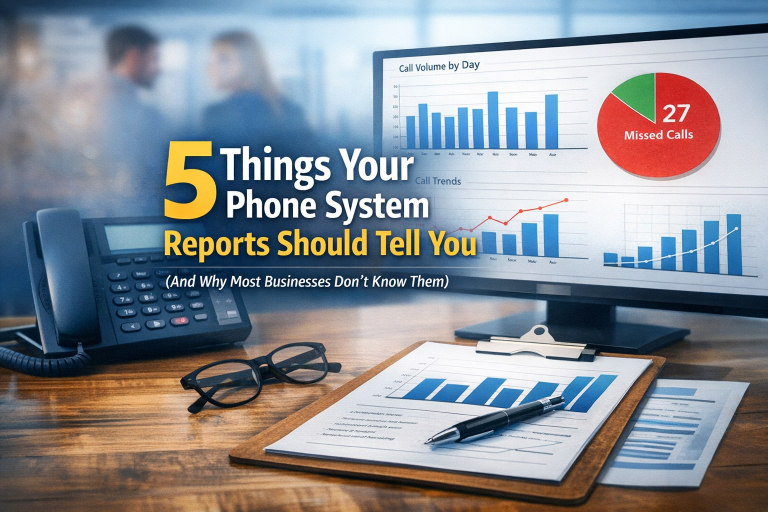
5 Things Your Phone System Reports Should Tell You
Most businesses have call data sitting there every day — but very few use it to spot missed opportunities, staffing gaps, and customer service issues before they cost real money.
Most businesses install a phone system, answer calls, and move on. Fair enough. But the problem is your phone system can tell you a lot more than just who rang and when.
A proper phone system report should help you understand call volume, missed calls, peak times, staff answering patterns, and business trends over time. That is where call reporting stops being a boring spreadsheet and starts becoming useful.
Here are the 5 things your phone system reports should tell you if you want better visibility, better customer experience, and fewer missed opportunities.
1. How Many Calls You Are Actually Receiving
Sounds basic. It is basic. And yet plenty of businesses still don’t have a clear view of their real call volume.
Your phone system reporting should show:
- Total calls per day
- Total calls per week
- Peak call times
- Busy periods
- Quiet periods
This matters because if most of your calls land between 9:30am and 11:00am, but you only have one person available to answer them, you have a bottleneck. Not a mystery. A bottleneck.
2. How Many Calls You Are Missing
This is usually where the real value starts. A proper missed call report should not just show that calls were missed. It should show when, how often, and ideally where in the business the issue is happening.
Your reports should show:
- Total missed calls
- Missed calls by day
- Missed calls by time
- Missed calls by extension, group, or department where possible
If you are missing calls during lunch, after hours, or when a key staff member is off-site, that tells you exactly where the weak spot is in your call handling.
Before You Go Further, Check Your Call Flow
If your business is missing calls, the first thing to look at is your call flow. Bad routing, after-hours gaps, and reception bottlenecks can quietly wreck customer experience.
We created a simple checklist to help businesses spot these issues fast.
View the WTCO Call Flow Checklist3. Who Is Answering Calls, and Who Isn’t
This part makes some businesses twitchy, but it should not. This is not about turning your phone system into a surveillance device. It is about visibility.
Good phone system analytics should show:
- Calls answered per user
- Average answer time
- Call handling performance
- Department or team answering patterns
It can highlight if one person is carrying the load, if calls are being left to ring out, or if certain departments are getting swamped.
4. When Your Business Is Busiest
Your phone reports should clearly show the busiest periods in your week. Not guesses. Not “it feels like Mondays are chaos.” Actual data.
Useful reports should show:
- Busiest day of the week
- Busiest time of day
- Call spikes
- Seasonal or recurring trends
Once you know when your business is busiest, you can staff smarter, adjust routing, and stop pretending the rush “came out of nowhere.”
5. Call Trends Over Time
This is where PBX reporting becomes proper business intelligence. It should not just show what happened this week. It should help you see what is changing over time.
Your reporting should help identify:
- Month-to-month call growth
- Seasonal trends
- Changes after marketing campaigns
- Growth or slowdown patterns in demand
When businesses can connect call data to sales activity, ad campaigns, and staffing decisions, they stop flying blind.
What Most Businesses Are Missing
Most businesses use their phone system to answer calls. Smart businesses use it to improve how the business runs.
The right call reporting can help you reduce missed calls, improve staffing, spot weak points in your call flow, and make better decisions based on real numbers rather than gut feel.
WTCO Call Reports
At WTCO, we do more than dump numbers into a report and call it a day.
Our call reporting can help show:
- Total call volume
- Missed call analysis
- Peak call times
- Staff answering insights
- Clear suggestions based on what the data is saying
In other words, we help turn your phone system data into something useful, not just something that gets filed away and ignored.
Want to See What Your Phone System Is Telling You?
Book a WTCO Call Report review and see where your call handling, missed calls, and reporting could be improved.
Book Your Call Report ReviewStruggling with Poor Communication Systems?

Claim Your FREE 30-Minute Business Communications Strategy Session
(Valued at $880)!
Discover how to boost productivity and get great value—without the sales jargon or years of trial and error. Limited spots available!